


Introduction
Working Principle
It adopts a graded density structure (loose outer layer, dense inner layer) with three filtration layers to capture impurities step by step from outside to inside, effectively removing microorganisms, particles, rust, sediment and other contaminants in water. The outer layer captures large particles, the middle layer captures medium particles, and the inner layer captures fine particles, ensuring high dirt holding capacity and long service life.

Features
Graded progressive filtration: Loose outer layer and dense inner layer, layered filtration, good dirt holding capacity and longer service life.
Structural stability: Adopts internal thread structure for enhanced pressure resistance, preventing deformation under operating pressure.
Food grade material: Made of polypropylene material, non-toxic and tasteless, meeting FDA requirements.
Large filtration area: Optimized structure increases effective filtration area, improving flow rate and dirt holding capacity.
Advantages
High efficiency pre-filtration: Effectively removes sediment and particles, protecting downstream RO membranes and equipment.
Chemical compatibility: Resistant to strong acids, strong alkalis and organic solvents, suitable for various industrial water treatment scenarios.
Long service life: Graded density structure reduces replacement frequency and operating costs.
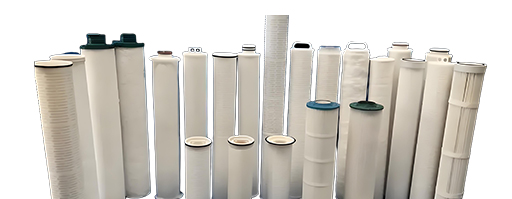
Easy installation: Multiple interface options (flat, threaded, needle-punched) to adapt to different filter housings.
Application
Reverse osmosis system pre-filtration: Removes sediment and particles to protect RO membranes.
Industrial water treatment: Pre-filtration of circulating water, process water and wastewater.
Food and beverage industry: Filtration of drinking water, fruit juice and edible oil.
Pharmaceutical industry: Purification of pharmaceutical water and chemical reagents.
Electronic industry: Pre-filtration of ultra-pure water and electronic chemicals.


